How to Estimate Network Cabling Installation for a New Office
Estimating network https://ethernetcabling702.huicopper.com/ethernet-cabling-for-conference-rooms-workstations-and-server-closets cabling installation for a new office looks simple from a distance. Count desks, price a few cable runs, add a closet switch, done. In practice, the estimate lives or dies on the details hidden in the ceiling, behind the walls, and inside the construction schedule.
I have seen two offices with the same square footage land at wildly different numbers. One was an open plan with clean ceiling access, a central telecom room, and standard CAT6 cabling. The other had polished concrete floors, exposed ceilings, glass-walled offices, and a landlord who would not allow any visible surface raceway. The second job cost far more, not because the client wanted anything extravagant, but because the building made ordinary work harder.
If you are budgeting office network cabling for a move, expansion, or first fit-out, a solid estimate should answer three questions. How many cable runs are needed, what infrastructure will support them, and how difficult will it be to install everything cleanly and to code. Once those are clear, the numbers start to make sense.

Start with scope, not price per drop
Many people ask for a rough price per cable drop. That can be useful as a quick benchmark, but it is not a reliable estimate by itself. A single network drop in a wide-open office with easy access might be straightforward. That same drop becomes expensive if the cable has to cross a long distance, pass through fire-rated walls, enter a packed ceiling space, or terminate inside modular furniture.
A better approach is to define scope in layers. First, identify the number of work areas that need service. Then decide how many ports each work area requires. After that, account for shared devices such as wireless access points, printers, phones, cameras, access control devices, conference room equipment, and any specialty systems that use low voltage cabling.
A common planning mistake is to estimate only for current headcount. If the new office opens with 35 employees and has space for 50, the cabling should usually support the larger number, or at least make expansion easy. Pulling additional data cabling later is almost always more expensive than doing it during the initial build.
The information you need before you can price accurately
A good estimate starts with a few key documents and decisions. Without them, even an honest contractor is guessing.
- A floor plan that shows workstations, offices, conference rooms, reception, break areas, and the telecom room
- A reflected ceiling plan or at least a clear description of ceiling type and access
- A device count for desks, access points, VoIP phones, cameras, printers, and AV systems
- The desired cabling standard, typically CAT6 cabling or CAT6A cabling
- Any landlord, building, or code requirements that affect pathways, permits, or working hours
When those items are missing, contractors often protect themselves by padding labor, adding contingency, or excluding pieces that later become change orders. None of that is unreasonable. They are pricing uncertainty.
Count outlets the right way
In office network cabling, the real unit is not the employee. It is the outlet and the cable run behind it.
A private office might need two data ports at the desk, one for a phone or docking station, one spare for a printer or secondary device. A cubicle position might need the same. A conference room can easily require six to twelve connections once you count the display, room scheduler, table box, video bar, wireless presentation device, and a dedicated line for an access point nearby. Reception often needs more than expected because front desks tend to accumulate devices over time.
For most standard office environments, planning two ports per workstation is a sensible baseline. Some organizations still use one active port and rely heavily on Wi-Fi, but that can be shortsighted for finance teams, power users, shared docking stations, and anyone running voice or video constantly. If the walls are open and the contractor is already on site, the second cable is cheap insurance.
Wireless access points deserve special attention. Modern offices depend heavily on them, yet they are often omitted from early estimates. Access points should be planned based on coverage, user density, wall construction, and ceiling type, not just square footage. In a dense office, one extra access point can improve the user experience more than any switch upgrade, but it still needs a properly placed ethernet cabling run and usually PoE capacity on the switching side.
The building tells you how expensive the job will be
Labor drives a large share of network cabling installation cost, and labor is shaped by the building.
A suspended ceiling with clear pathways is installer-friendly. Cable can be routed above the ceiling grid, supported properly, and dropped down inside walls or columns with reasonable effort. An exposed ceiling can look great architecturally, but it changes everything. The cable has to be routed neatly, often through conduit or painted surface pathways, with much tighter expectations for appearance. That adds material and time.
Floor construction matters too. Core drilling through slab, trenching, or working with furniture feeds can push the price up quickly. So can long runs to remote corners of the suite, or the need to avoid electrical interference in crowded utility zones.
Then there are access restrictions. Some office towers limit work to evenings. Some require a building engineer on site for any activity above the ceiling. Some demand special firestopping methods, insurance certificates, dust control, or lift protection. None of those items are exotic, but each one affects the estimate.
This is why one contractor may quote much higher than another even when both are competent. The better estimator has probably noticed more of the real conditions.
Choosing between CAT6 cabling and CAT6A cabling
The cable category has a major effect on material cost, and sometimes on labor as well.
CAT6 cabling remains the standard choice for many offices. It supports typical workstation needs well, handles gigabit comfortably, and can support 10-gigabit performance over shorter distances depending on the environment. For many business network installation projects, CAT6 is the practical balance between performance and cost.
CAT6A cabling costs more and is thicker, less flexible, and more demanding to dress neatly in bundles and racks. That means higher material costs and often more installation time. The upside is better support for 10-gigabit applications at the full channel distance and stronger performance in environments with higher cable density and PoE demands.
Whether CAT6A makes sense depends on use case. If you are fitting out a conventional office with cloud applications, video calls, and normal endpoint traffic, CAT6 is often enough. If you are planning for high-throughput local traffic, heavy wireless backhaul, advanced AV systems, or a long hold period where you do not want to touch the cabling again for many years, CAT6A may be the right call.
I have also seen hybrid designs work well. Use CAT6A for backbone links, wireless access points, and high-priority spaces like conference rooms or media-heavy teams, while using CAT6 for standard desk drops. That can trim cost without sacrificing the parts of the network that matter most.
Don’t forget the pathways and support hardware
The cable itself is only part of structured cabling. A realistic estimate includes the things that make the system serviceable, safe, and maintainable.
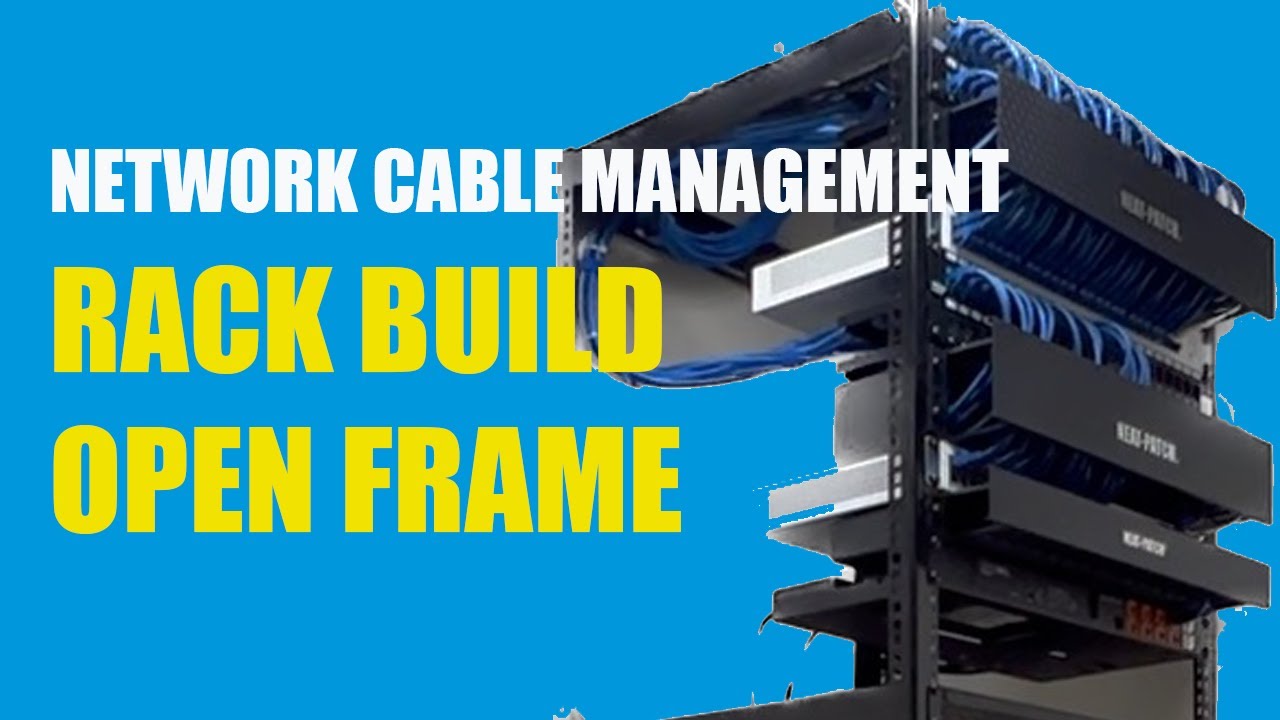
Pathways might include J-hooks, cable tray, basket tray, conduit, sleeves through walls, and riser pathways between floors. At the endpoint, you need faceplates, jacks, boxes, and patch cords. In the telecom room, you need patch panels, racks or cabinets, vertical and horizontal cable managers, grounding, ladder rack in some cases, and labeling.
These parts rarely get much attention from non-technical stakeholders, yet they often determine whether the finished installation is tidy or chaotic. A cheap quote that omits proper support and management can leave you with a room full of sagging bundles, unlabeled patch panels, and expensive troubleshooting later.
For office network cabling, I usually encourage clients to think about maintainability as part of the estimate, not a luxury add-on. The team that inherits the room six months later will appreciate it.
Labor estimating is where experience shows
Material pricing is fairly transparent. Labor estimating is where seasoned contractors separate themselves.
An experienced estimator looks at route distances, termination counts, closet build-out, access conditions, and testing requirements. They also know that a run is never just a run. It includes setup, pathway navigation, pulling, dressing, termination, labeling, testing, and cleanup. If multiple trades are in the same space, productivity drops. If the walls are not closed yet, some parts get easier and some get harder because schedules shift and areas remain in flux.
For standard data cabling in an open office with decent access, contractors may be able to price efficiently and competitively. For a tenant improvement with active occupants nearby, protected finishes, and fragmented work windows, labor can climb even if the cable count stays the same.
This is why estimates built from a simple “cost per drop” spreadsheet often miss reality. The sheet cannot see the painter’s lift parked in the only route to the telecom room, or the fact that the access point locations are all on a concrete deck with no easy pathway.
Common items that move the estimate up late in the process
These are the change-order magnets in new office projects, especially when the design team, IT team, and cabling contractor are not aligned early.
- Additional wireless access points after a post-design coverage review
- Conference room AV requirements that need more ports than originally shown
- Furniture changes that shift outlet locations after rough-in
- Firestopping, coring, or conduit requirements discovered during installation
- Patch cords, rack cleanup, or labeling standards that were assumed but not included
I have seen a neat, well-priced structured cabling proposal turn into a frustrating billing dispute simply because the client assumed patch cords and switch patching were included, while the contractor assumed they were by-owner items. Good estimates spell those boundaries out.
How to build a practical budget number
If you are not ready for a detailed contractor quote and just need a planning budget, work from the office layout and build the estimate in pieces.
Start with the horizontal cabling count. Multiply the number of planned outlets by the number of cables per outlet. Add dedicated runs for wireless access points, printers, cameras, access control, AV, and any future spare capacity you want. Then consider average run length. In a compact office with a central telecom room, average runs may be modest. In a long, narrow floor or a multi-wing suite, average runs increase fast.
Next, include the telecom room build-out. Even a modest office usually needs more than a wall-mounted patch panel. You may need a two-post rack or cabinet, patch panels sized for current and future ports, cable management, grounding, and often plywood backboard or dedicated power depending on the room.
Then price the pathways. In some offices this is a small line item because the ceiling is friendly and J-hooks are sufficient. In others, pathway work is a substantial part of the job because conduit, tray, sleeves, and finished-space routing are required.
Testing and certification should be included as well. Professional network cabling installation is not finished when the jacket is terminated. Each permanent link should be tested to the applicable cabling standard, and the results should be documented. This matters for warranty, troubleshooting, and accountability. If certification is absent from the estimate, ask why.
Finally, leave room for contingency. On a straightforward office fit-out with good drawings, a modest contingency might be enough. On a renovation with incomplete plans, uncertain ceiling conditions, or schedule pressure, the cushion should be higher.
A rough example from a midsize office
Consider a 12,000 square foot office with 48 workstations, 6 private offices, 4 conference rooms, 1 reception desk, 1 break area printer station, and 5 wireless access points. Suppose the client wants two data ports at each workstation and office, extra ports in conference rooms, and standard patch panel terminations in one central telecom room.
The workstation and office count alone may yield around 108 ports. Add conference room needs, perhaps 24 more depending on AV design. Add reception, the printer station, and access points, and you could easily be at 140 to 150 cable runs before any spare capacity. If the client wants 15 percent growth, the patching infrastructure may be sized closer to 168 or 192 ports.
If this office has a clean drop ceiling and the telecom room sits near the center, the estimate may stay relatively efficient. If the same office has an exposed ceiling with architecturally sensitive routes and no easy vertical surfaces for clean drops, the cost can rise sharply. The difference is not waste, it is craftsmanship and compliance.
That is why square footage alone is a weak estimator. Device density and building conditions matter more.
The difference between a quote and a usable proposal
When reviewing bids for business network installation, look past the total number. A low number that leaves out testing, labeling, pathway support, permits, or telecom room hardware is not actually cheaper. It is incomplete.
A usable proposal should describe the cable type, number of runs or ports, termination method, testing standard, hardware included, pathway assumptions, exclusions, and schedule assumptions. It should also say whether permit costs, after-hours work, patch cords, switch installation, and final as-built documentation are included.
If one quote is much lower than the others, there is usually a reason. Sometimes it is efficiency or lower overhead. Often it is a scope gap.
New construction and renovation estimate differently
A brand-new office build where walls are open and trades are coordinated is usually the best-case scenario for data cabling. The installer can route cable efficiently, place outlets cleanly, and coordinate with electricians, framers, and ceiling crews in sequence.
Renovation work is harder to estimate and usually more expensive. Existing conditions are rarely as clean as the drawings suggest. There may be abandoned cabling to remove, inaccessible ceiling pockets, undocumented fire barriers, or old pathways that are already full. Occupied renovations add another layer because dust control, noise restrictions, and phased work reduce productivity.
If you are comparing numbers between a new fit-out and a renovation, expect the renovation to carry more uncertainty and more contingency.
Why low voltage cabling often belongs in the same conversation
A new office rarely needs only network cabling. Security cameras, access control readers, intrusion devices, audiovisual systems, and sometimes sound masking all fall under low voltage cabling. These systems share pathways, closet space, and coordination points with the data network.
Even if different vendors handle each system, estimate them together at the planning stage. Otherwise, the cabling pathways get undersized, the telecom room gets crowded, and everyone ends up blaming each other when there is no rack space left.
This is especially important for conference rooms and entry areas, where separate scopes tend to collide. A conference room may need structured cabling for the network, plus AV feeds, control lines, display connections, and sometimes occupancy sensors or scheduling panels. The room looks simple on the floor plan. The cable count says otherwise.
A few judgment calls that save money without cutting corners
Not every office needs the same level of infrastructure. There are places to spend carefully and places to simplify.
If the office has a short lease and modest performance demands, CAT6 may be the sensible standard throughout. If the company is building a flagship space with a ten-year horizon, the premium for CAT6A cabling in strategic areas can be justified. If wireless is central to the workplace model, invest in good access point placement and sufficient cabling for them rather than overbuilding every desk.
Likewise, do not overspend on elaborate cabinetry in the telecom room if a well-organized open rack suits the space and security model. But do not skimp on labeling, testing, and cable management. Those are small costs compared with the operational friction of a messy installation.
The site walk is where the estimate becomes real
No matter how good the drawings are, a site walk changes the quality of the estimate. It reveals the ceiling height, route complexity, wall types, working clearances, delivery logistics, and the general temperament of the building. It also surfaces coordination issues, such as whether the furniture plan actually aligns with the electrical and data locations.
I trust estimates far more when someone has put eyes on the space. Even for a budgetary number, a short walk-through can prevent major misses.
If the office has not been built yet, ask the estimator to review architectural, electrical, and reflected ceiling plans together. That is often enough to spot the expensive areas before they become surprises.
What a healthy estimating process looks like
A healthy process is collaborative. The client or project manager shares current plans, the IT team confirms port counts and standards, the cabling contractor reviews pathways and terminations, and everyone agrees on what is included before work starts.
The goal is not just to get the lowest number. It is to get a number you can trust.
With office network cabling, surprises usually come from assumptions left unstated. If you define the scope clearly, choose the right cable category, account for pathways and closet hardware, and respect the building conditions, your estimate will be close enough to budget confidently and detailed enough to compare contractor proposals fairly.
That is the difference between pricing cable and estimating a network.